
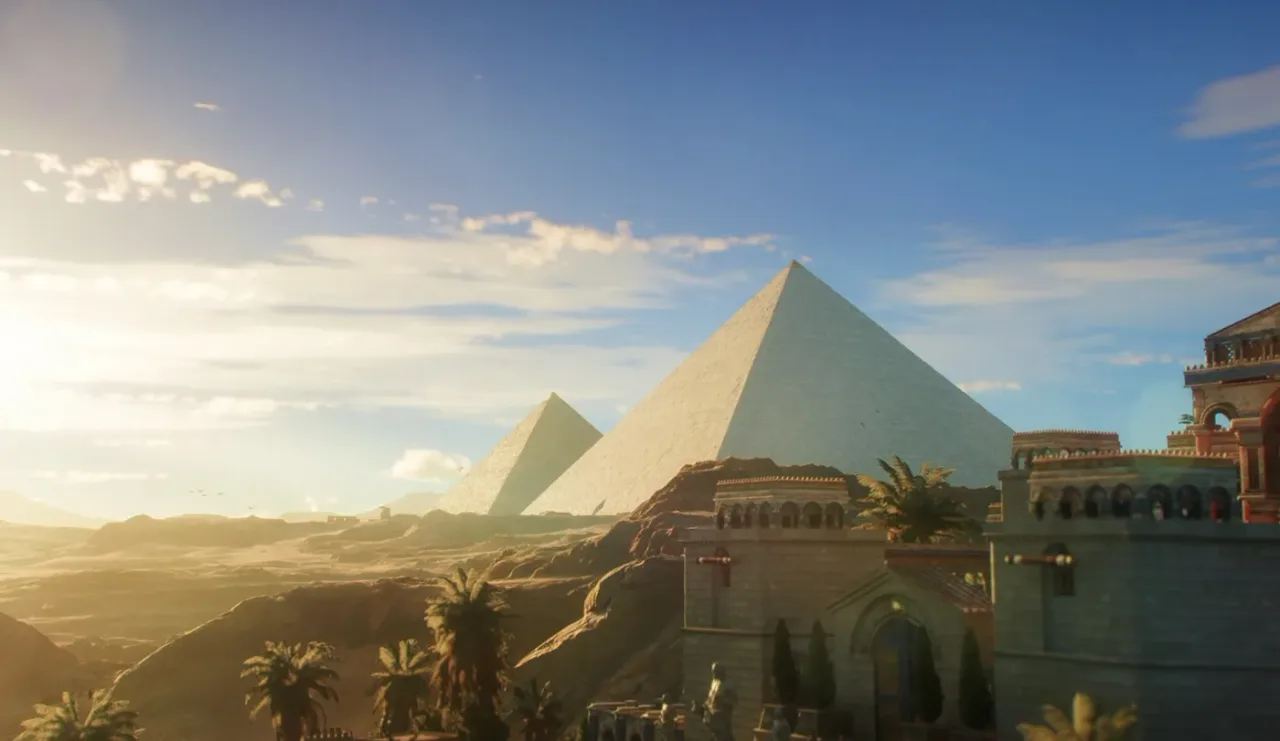
Ubisoft's latest devblog fills in the rest of Dawn of the Delta, which comes out on 5 November at 10:00 UTC on every platform. Our first post covers the province and its people. This one covers its gods, its new characters and the pyramids.
Three deities
Sobek is available from the start. The other two have to be discovered through research first. Temples and sanctuaries take on an Aegyptian look when you worship one of them.
- Sobek: lifts food production such as cheese sausages, stuffed geese and sanga cattle, adds water for irrigation, and brings extra population. Worshipped across your empire, he unlocks dovecotes that attach to plantations and make them more productive.
- Isis-Bastet: lifts lavender, perfume and dates, and lowers how many goods your residents consume. Across your empire, festivals last longer, and large cat shrines add a wider area effect with more population, income and prestige.
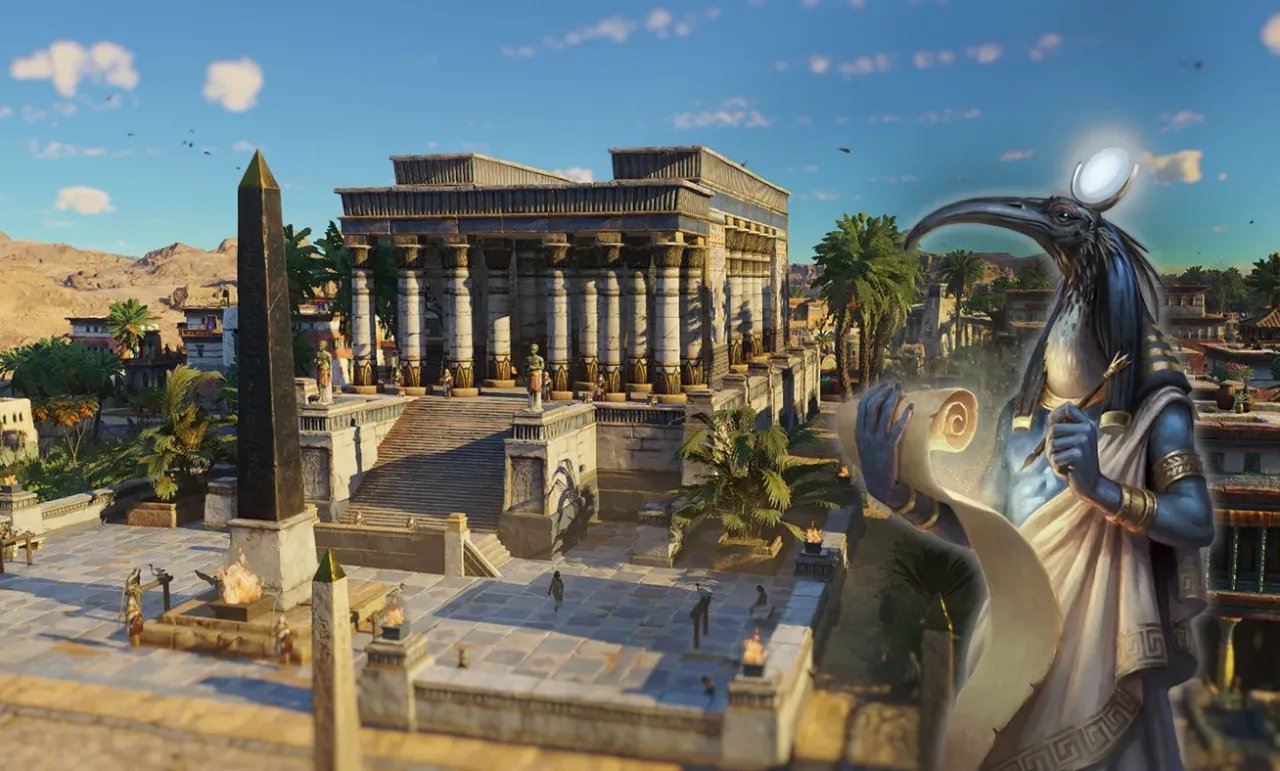
- Thoth-Trismegistos: lifts refined goods such as glass, wine, writing tablets and scribing sets, and bases an island's income and prestige on its knowledge. Across your empire, librarians boost every production building in range of a library.
New characters
- Epistrategos Heron: the Emperor's representative, at the big port of Naukratis in the west of the delta. He trades and passes on news, but has no army behind him.
- Valeria: you know her already. She now has a small harbour by the river for her trading.
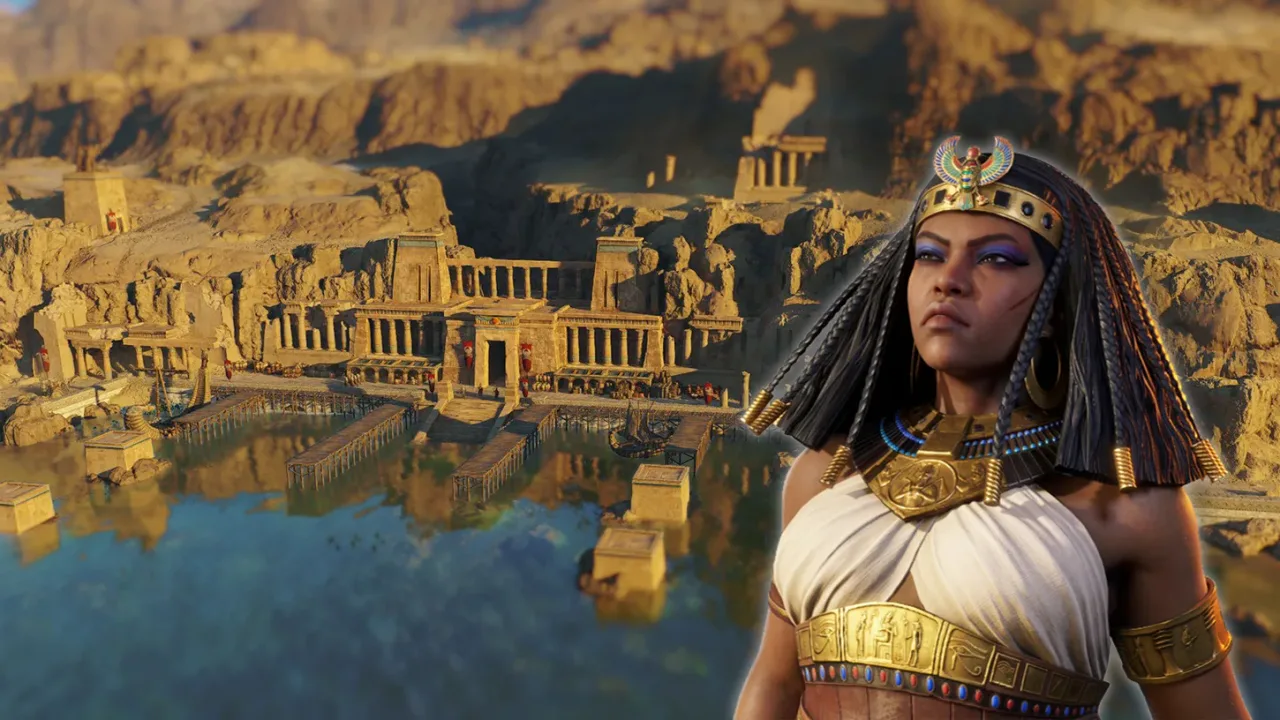
- The Kandis of Kashta: the local raider, based far to the south in the Valley of the Pharaohs. She attacks ships and settlements unless you pay. Getting rid of her means destroying her harbour and sending troops up the valleys.
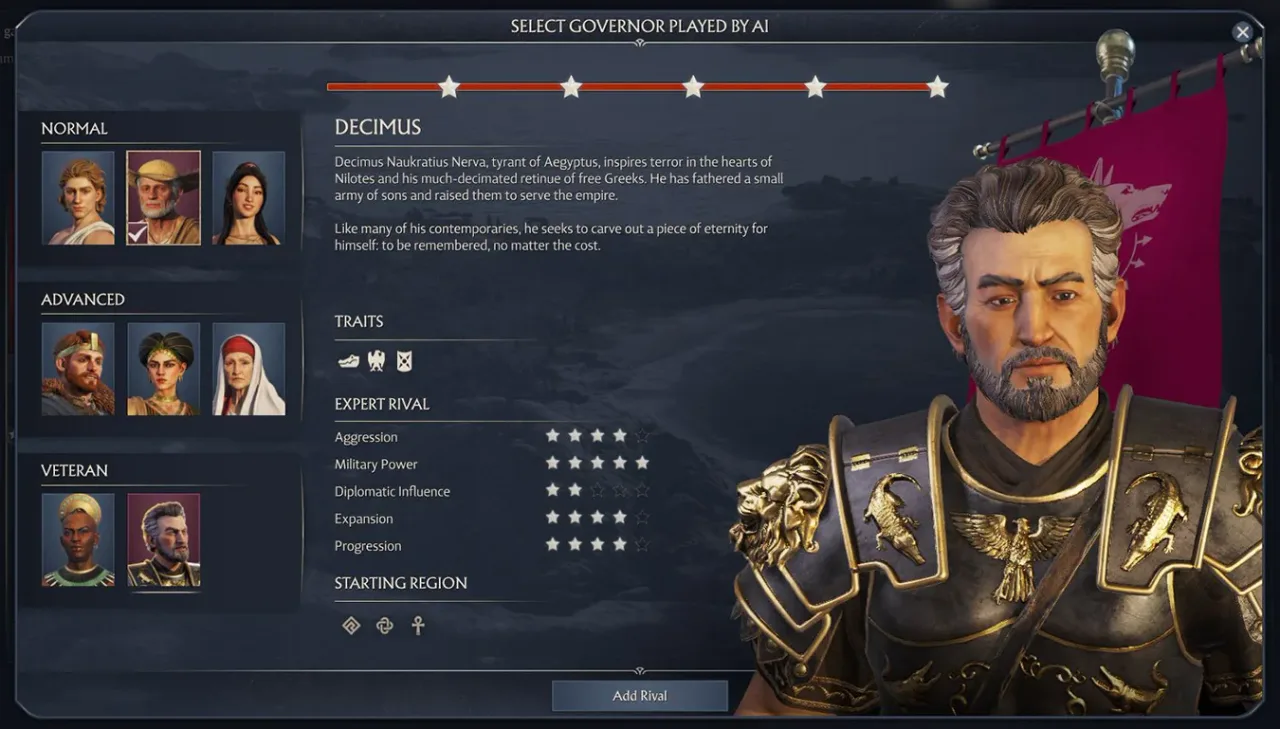
- Decimus Naukratius Nerva: a new rival governor, known as the tyrant of Aegyptus and the father of the campaign's Marcus and Marcia. No other rival matches his military power. He favours the Roman way and looks down on anyone who picks the Aegyptian path.
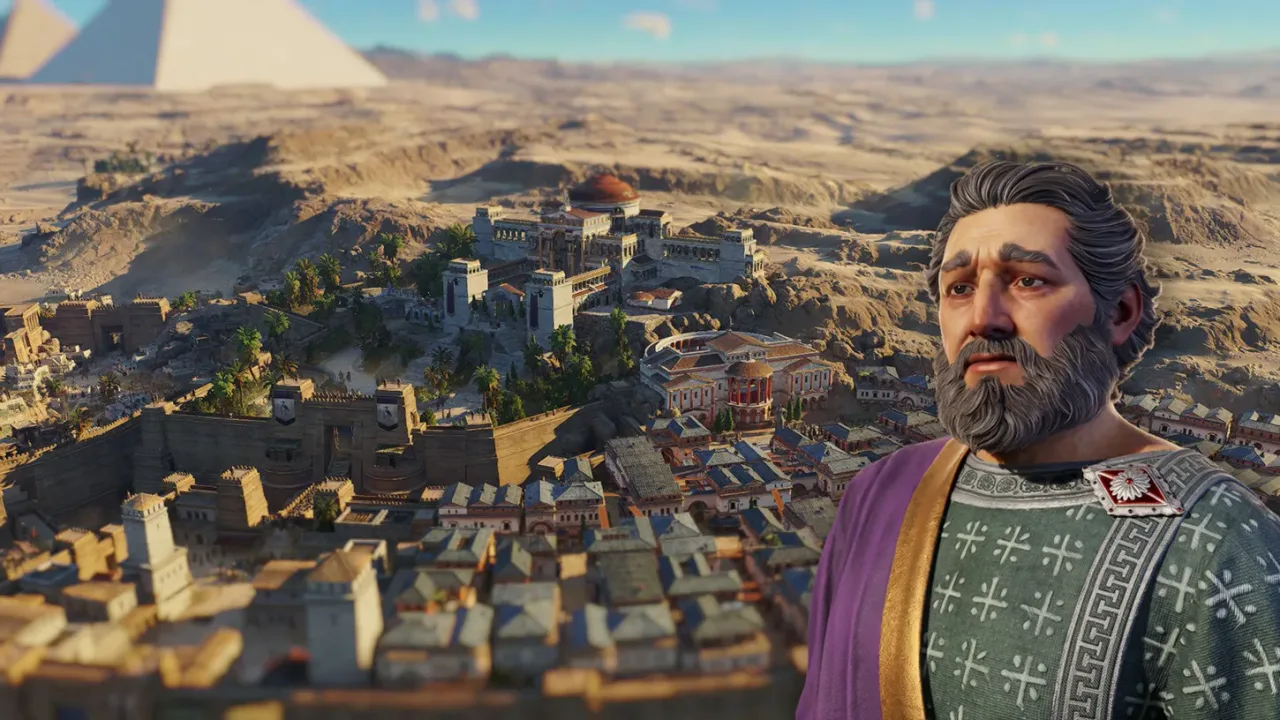
The expansion's main story is a murder mystery. Nymphaeus, a popular figure in Naukratis who championed the two cultures living side by side, is pulled dead from the river. You can investigate, or skip it and just build.
The pyramids
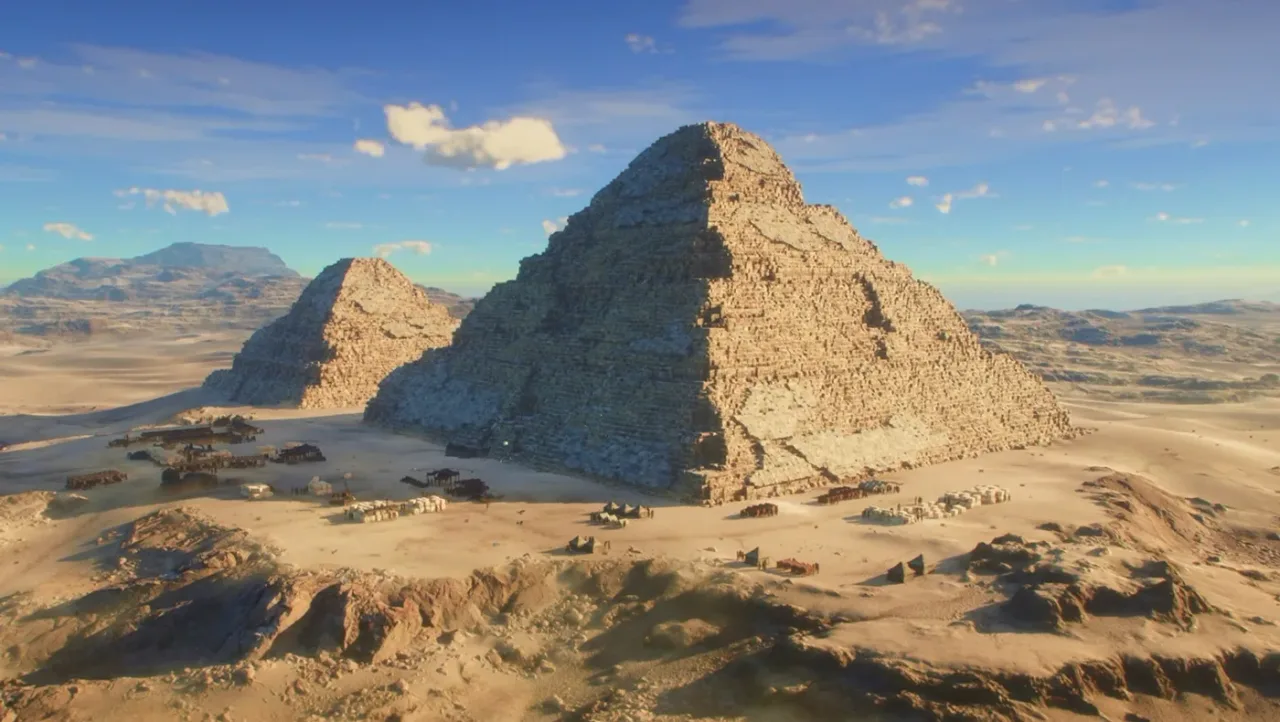
The pyramids are ancient ruins when you arrive, and restoring them is a job for the whole province: they stand near Naukratis, on nobody's island.
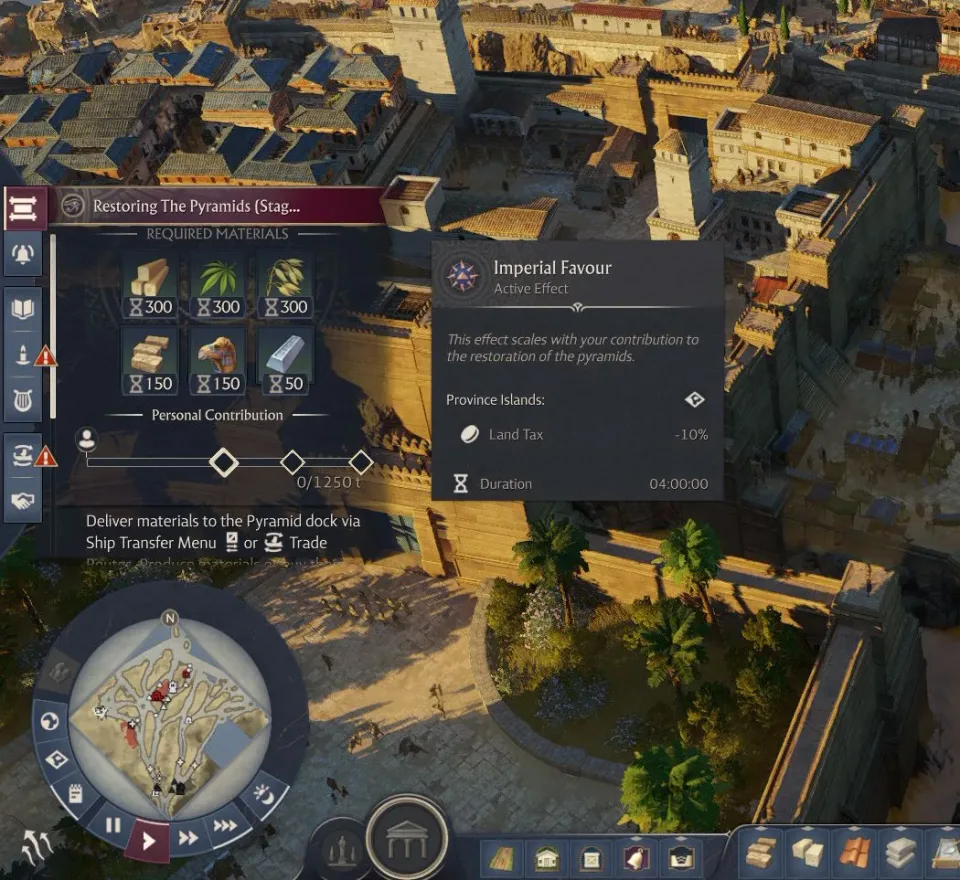
- Deliveries: the work runs in several phases, each needing large loads of tiles, granite, marble, tunics and food at the pyramid dock. Dromedaries speed up the transport.
- Rewards along the way: every finished phase lowers the imperial land tax on all your islands and raises prestige.
- A race with rivals: other governors deliver too, and whoever finishes their share first gets the stronger bonus.
- When it's done: prestige for the whole province and, for a while, a better chance of heroic specialists, including the three new ones from the expansion. Ceremonies at the pyramids extend this.
The restored pyramids also meet a need of the third tier of residents, Chanters and Gymnasiarchs, adding happiness and prestige.
Also in the expansion
- Two units to research, unique to the province: the Kushite archer, with long range and accuracy, and Dromedarii cavalry, which lower the morale of enemy cavalry and infantry.
- Aegyptian goods serve as alternative needs for residents in Latium and Albion.
- Its research tree also helps in other provinces, for instance with cheaper monument maintenance and faster monument construction.
Update 3.0 comes out the same day.